
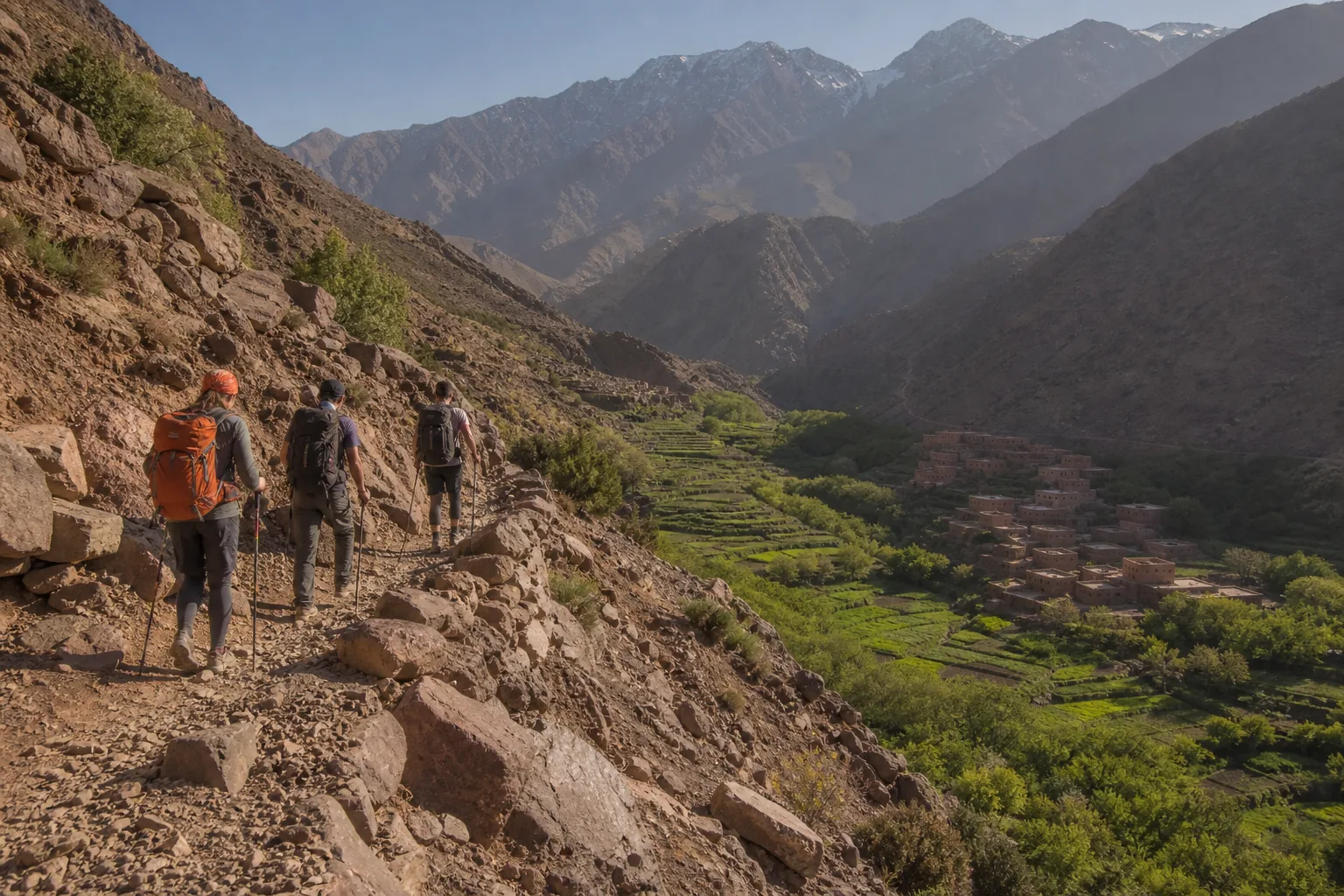
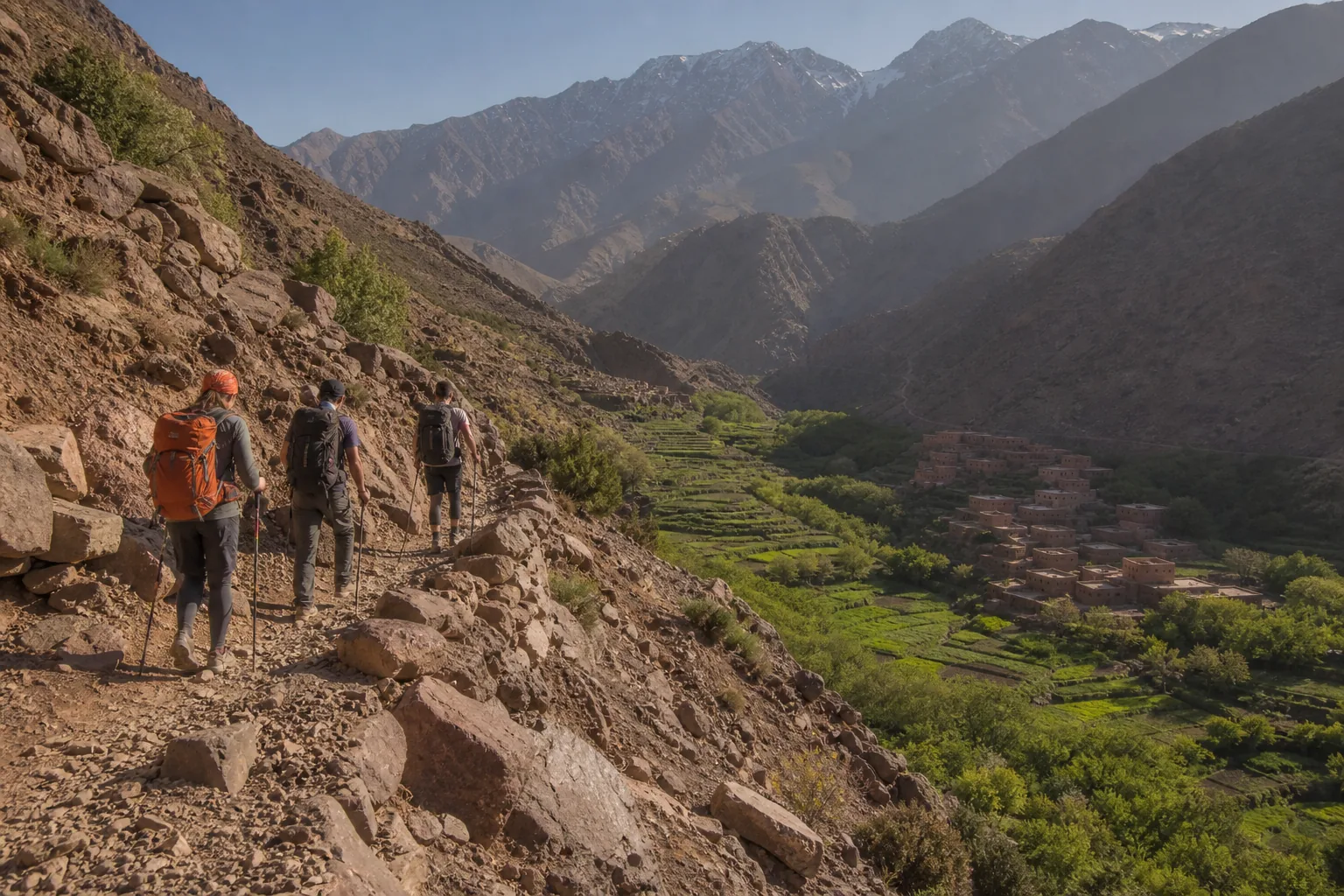
Atlas Mountains trekking Morocco can be as demanding as a summit climb or as gentle as a village walk. The best route depends on your time, fitness, season, and comfort with high ground. Use this guide to match your plans with the right trail, pack well, and arrange a smooth journey from Marrakech.
Atlas Mountains Trekking Routes: From Toubkal to Valley Walks
Atlas Mountains trekking Morocco covers several kinds of walks, not one single trail. The High Atlas gives you steep passes and high peaks, while valley routes bring a slower day among terraced fields, streams, and mountain villages.
Mount Toubkal is the best-known goal in the range. A summit plan usually starts near Imlil and includes an overnight stay before the climb. The final ascent is steep and rocky. You need an early start, a steady pace, and enough time to turn back if weather or fatigue becomes a problem.
Valley treks suit travelers who want mountain views without a summit attempt. Routes around Imlil can link small villages and passes over several days. A shorter walk can also focus on one valley, with a local guide setting the pace and choosing safe paths after rain.
| Route style | Best for | What to expect | Main caution |
|---|---|---|---|
| Toubkal summit trek | Fit hikers with mountain experience | Steep ascent, high altitude, early summit start | Altitude and fast weather shifts |
| Multi-day valley trek | Travelers who want culture and scenery | Village paths, passes, longer days | Uneven ground and limited services |
| One-day valley walk | Visitors with limited time | Moderate walking near a base village | Less time for route changes |
| Private custom trek | Groups with mixed needs | Flexible stops, private transport, tailored pace | More planning is needed before departure |
A route guide from this Atlas Mountains trekking overview can help you compare the main trail areas before you choose. Still, online route notes can’t replace a local check of trail conditions, snow, or water access.
Think about the group before you book. A strong hiker may enjoy a summit day, while another traveler may prefer a valley route with a long lunch and time for photographs. A private itinerary makes that split easier because the walking plan can match the group instead of forcing every person into the same pace.
Luxury Private Tours Marrakech can arrange private transport from Marrakech and shape a tailor-made itinerary around your walking goals. That can be useful when you want a mountain trek to fit beside a kasbah visit, a desert camp, or a few quiet days in the city.
When to Go: Weather and Trekking Seasons in Morocco
The best season for Atlas Mountains trekking Morocco depends on elevation and route. Valley walks can work across a wider part of the year, but high routes face snow, ice, heat, and sudden storms.
Spring often brings clear mountain views and cooler walking weather. Snow can remain on higher trails, so summit plans need current local advice and the right gear. Lower valleys may feel warm while the upper slopes stay cold.
Summer can be hot in exposed valleys, especially after the sun climbs. Start early, rest in shade, and carry enough water for stretches without a reliable refill. Higher routes may feel more comfortable, but sun exposure still adds strain.
Fall is often a good fit for walkers who want crisp air and less heat in the valleys. Conditions can change as the season moves on. Winter brings cold nights and snow risk at high altitude. A simple village walk may remain possible, while a summit route may need specialist kit and a guide with current mountain knowledge.
Before leaving Marrakech, ask three direct questions:
- What will the weather do at the highest point of the route?
- Is snow or ice present on the path?
- Where can the group refill water?
The Atlas Mountains reference page gives useful geographic context, but it isn’t a live forecast. Use a current forecast and a local route check before you set off.
Luxury Private Tours Marrakech can adjust departure times and transport plans when conditions change. That flexibility matters on a private trip. You may leave earlier to beat heat, shorten a walk, or swap a high trail for a lower village route.
Difficulty, Altitude, and Safety on an Atlas Mountains Trek
Difficulty on an Atlas Mountains trek comes from more than distance. Loose rock, steep climbs, heat, altitude, and long descents can each change how a route feels.
Build your plan around the least experienced person in the group. A trail that feels easy to one walker may feel hard after several hours in the sun. Shorter days with breaks often produce a better trip than an ambitious route that leaves everyone exhausted.
Altitude needs respect. Toubkal and other high routes rise well above the valleys, so you may feel breathless sooner than expected. Move slowly at first. Drink regularly. Tell your guide if you develop a strong headache, nausea, unusual tiredness, dizziness, or trouble walking straight.
Do not try to push through serious symptoms. Descending is the main response when altitude illness becomes a concern. A guide should know the safest way down and where the group can get help.
Heat creates a separate risk. Wear a hat and cover your skin. Take breaks before you feel weak. On exposed slopes, a small amount of shade can make a large difference. Your guide can also set a pace that keeps the group together instead of letting fast walkers disappear ahead.
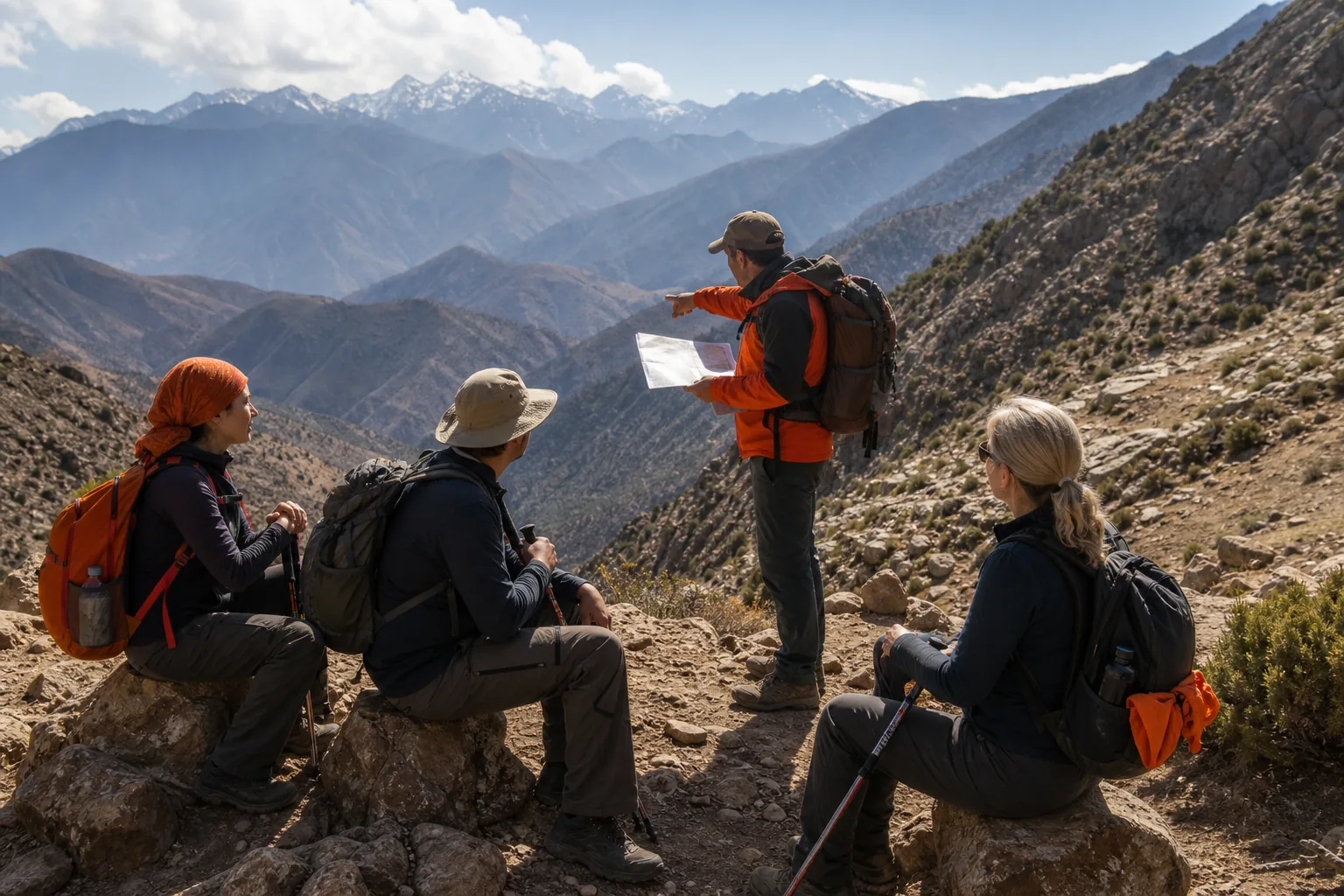
Footing deserves attention too. Mountain paths may cross loose stone, dry stream beds, or narrow sections above a slope. Good shoes with firm grip help, but they don’t remove the need to watch each step. Trekking poles can reduce stress on knees during a long descent.
For a clear medical overview of altitude illness, read the altitude sickness reference before your trip. If you have a heart, lung, or other medical condition, ask a qualified clinician whether a high trek is suitable.
Carry a basic first-aid kit, personal medicine, sun cream, and a charged phone. Tell someone outside the group where you’re going. A private driver should know the meeting point and the expected return time, especially when the walk begins away from the main road.
Safety is also a planning issue. A route with a clear turn-back point is better than a vague promise to “see how it goes.” Decide in advance what happens if weather worsens, someone feels ill, or the group moves more slowly than planned.
What to Pack and How Trekking Logistics Work
Packing for Atlas Mountains trekking Morocco means preparing for changing temperatures without carrying your whole suitcase uphill. Use layers. A light base layer helps during the climb, while a warm layer matters at rest stops and after sunset.
- Broken-in hiking shoes with firm grip
- Warm layer for high ground and cool evenings
- Rain shell or wind shell
- Sun hat, sunglasses, and sunscreen
- Refillable water bottles or a hydration bladder
- Small first-aid kit and personal medicine
- Headlamp for early starts or dark arrivals
- Small daypack with snacks and spare layers
- Cash for village purchases and tips
Keep your main luggage in Marrakech or with the transport team when the route allows it. Carry only what you need for the walking day. For an overnight trek, confirm who carries shared gear and what the lodging provides before you leave.
Logistics start before the trailhead. Your driver needs the right meeting point, while your guide needs the group’s fitness level and any health concerns. Confirm the start time, expected walking hours, lunch plan, water stops, and the finish point in plain language.
Private transport is useful when the route starts in one village and ends in another. It also gives you a place to leave spare bags and change clothes after the walk. Luxury Private Tours Marrakech combines a private driver with flexible planning, so a mountain day can connect neatly with a Marrakech stay or a wider Morocco tour.
Food plans vary by route. Ask if lunch is a packed meal, a village meal, or part of an overnight stay. If you have allergies or dietary needs, share them early. Don’t assume that a remote trail will have shops or cafés.
The main rule is simple: pack for the highest and coldest part of your route, then remove anything you won’t use. A lighter pack makes every climb easier.
Berber Villages, Local Guides, and Responsible Trekking
Mountain villages are part of the experience, not scenery placed beside the trail. Atlas Mountains trekking Morocco may pass homes, fields, irrigation channels, shrines, and working paths used by local people every day.
Walk quietly through villages. Ask before taking photographs of people or private homes. Dress with respect, especially near places of worship. A small greeting in the local language can make an encounter warmer, but good manners matter more than perfect words.
Use a local guide when the route is unfamiliar or the group plans to go high. A guide can read changes in weather, choose a safer line across rough ground, and explain how village life fits the land. That local knowledge is hard to replace with a downloaded route.
Stay on established paths where possible. Don’t leave food wrappers or tissue behind. Avoid taking stones, plants, or other items from the mountains. If a village meal or homestay forms part of the route, treat the host’s time and home with care.
Responsible trekking also means paying attention to water. Bottles and filters reduce single-use plastic, but you should confirm that refill points are safe before drinking. Your guide or trip planner can explain what each route supports.
We plan private journeys at Luxury Private Tours Marrakech with comfort and cultural depth in mind. That may mean a slower walk, a village stop, or a premium service that keeps transport and luggage simple. The aim is an authentic local experience that feels respectful rather than rushed.
Choose a plan that leaves room for people and place. A mountain day is better when you can pause, listen, and let the route unfold at a human pace.
FAQ
Is Atlas Mountains trekking Morocco suitable for beginners?
Yes, beginners can enjoy Atlas Mountains trekking Morocco if they choose a lower valley route and a sensible pace. Start with a shorter walk, use a local guide, and avoid making a summit the first goal. Good footwear and basic fitness matter more than speed. Tell the planner about your experience so the route matches your group.
How many days do you need for an Atlas Mountains trek?
You can enjoy a village walk in one day, but two or more days give you more time for valleys and mountain passes. A Toubkal plan usually needs extra time for acclimatization and an overnight stay. Your ideal length depends on altitude, route choice, and how much time you want for rest.
What is the best month for trekking in Morocco?
The best month depends on the trail and elevation. Spring and fall often suit valley walks because temperatures are milder, while summer can work better on higher routes if you start early. Winter brings snow and cold at high elevations. Check current conditions before booking a summit trek.
Do I need a guide for the Atlas Mountains?
A guide is strongly recommended for unfamiliar or high routes. A local guide can help with route choice, weather changes, village customs, and emergency decisions. You may manage a simple marked walk without one, but a guide makes a private itinerary safer and less stressful when the terrain changes.
What should I wear for Atlas Mountains trekking?
Wear layered clothing, sturdy shoes, sun protection, and a warm outer layer. Conditions can shift between a warm valley and a cold ridge, so avoid cotton-only clothing and carry rain protection. For winter or high-altitude routes, ask a local planner what extra equipment the current conditions require.
Conclusion
Choose your route around the group’s fitness, the season, and the highest point you plan to reach. For a comfortable private journey from Marrakech, ask Luxury Private Tours Marrakech to build a tailor-made itinerary with a private driver, local guide support, and time for the villages along the way. Your next step is to share your dates, walking experience, and preferred route style before you book.